
Summertime Saga
Play Summertime Saga
Summertime Saga Screenshots









Summertime Saga review
Explore gameplay mechanics, characters, and features of this popular adult-oriented dating simulation
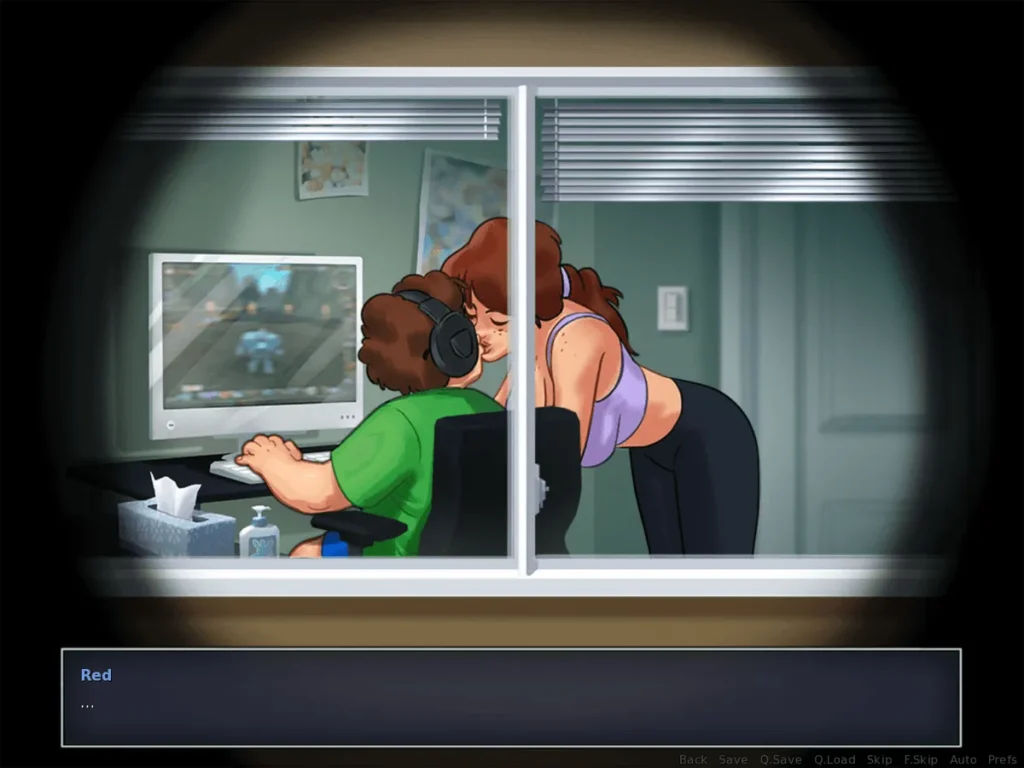
Summertime Saga stands out as a unique adult-oriented dating simulation game that combines storytelling, character interaction, and strategic gameplay. Developed by DarkCookie and supported by Patreon backers, this free-to-play game has grown into a complex narrative experience set in the fictional town of Summerville. Players navigate their final year of high school while managing relationships, uncovering mysteries surrounding their father’s death, and engaging with over 65 characters across 30+ locations. Unlike typical games in its genre that rely on anime or 3D models, Summertime Saga features distinctive hand-drawn cartoonish visuals that give it a unique aesthetic appeal. Whether you’re interested in the dating mechanics, character routes, or overall gameplay experience, this guide covers everything you need to know about what makes this game compelling.
Understanding Summertime Saga: Core Gameplay and Mechanics
Ever been so hooked on a game that you accidentally watch the sunrise? 🙃 That was me with Summertime Saga. I downloaded it on a whim, telling myself I’d just check out the premise. Next thing I knew, I was meticulously planning my in-game week, trying to balance college classes, a part-time job, and figuring out which character’s story to unravel next. It’s this intoxicating blend of mystery, romance, and everyday chaos that defines the Summertime Saga gameplay mechanics. If you’re new to this world, or just want to truly master it, you’re in the right place. Let’s break down exactly how to play Summertime Saga and why its systems are so compelling.
What Is Summertime Saga and How Does It Work?
At its heart, Summertime Saga is a story-driven experience. You step into the shoes of a young man whose life is turned upside down by his father’s sudden, mysterious death. The kicker? Dad left behind a massive debt to some very dangerous people. Your mission is simple on paper: navigate your new life, attend college, and somehow find a way to clear that debt before the loan sharks come collecting. 🏠💸
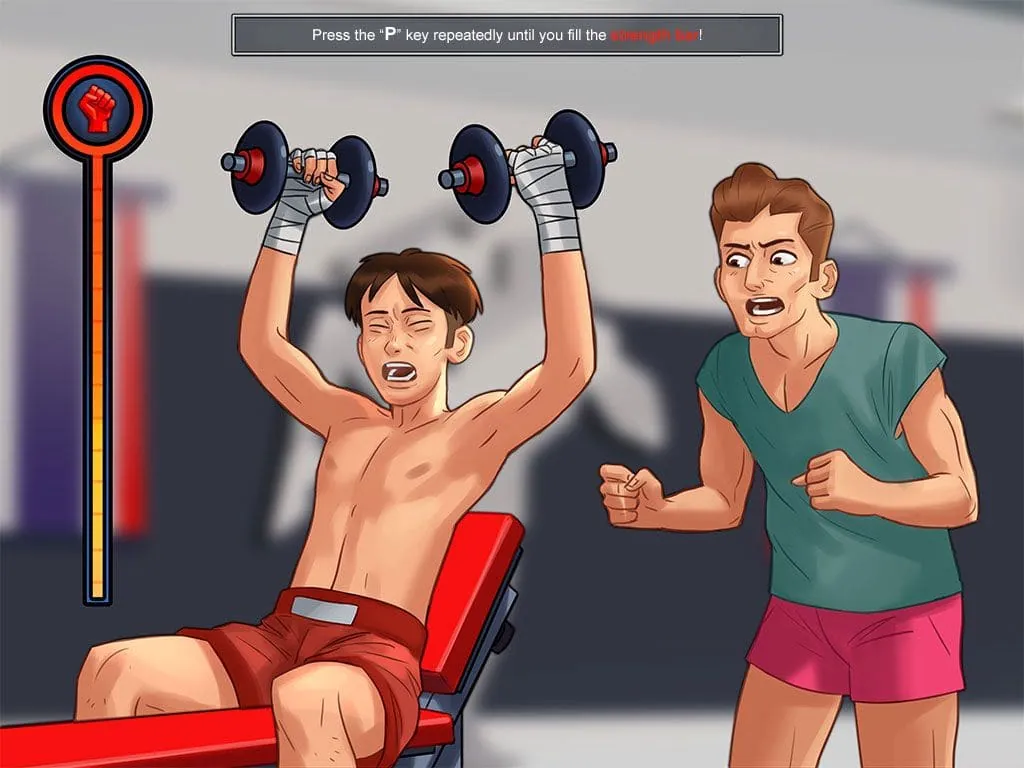
But how does it work? The game masterfully stitches together several genres into one cohesive experience. The core loop is all about time management and choice. Each in-game day gives you a set amount of energy to spend. You can use it to work out (improving your body stat), study (boosting your intelligence), get a job (earning crucial cash), or, most importantly, interact with the sprawling cast of characters in the town of Summerville. Your choices in dialogue and actions directly shape your relationships and unlock new story branches. This is the essence of the dating simulation game features—building connections, learning personal stories, and often, helping others with their problems to grow closer.
The open-ended nature is key. There’s no single “right” way to play. On my first run, I focused purely on money-making schemes and the main mystery. On my second, I ignored the debt and dove headfirst into the romantic subplots. Both were completely valid and wildly different experiences!
Visual Novel and Dating Sim Elements Explained
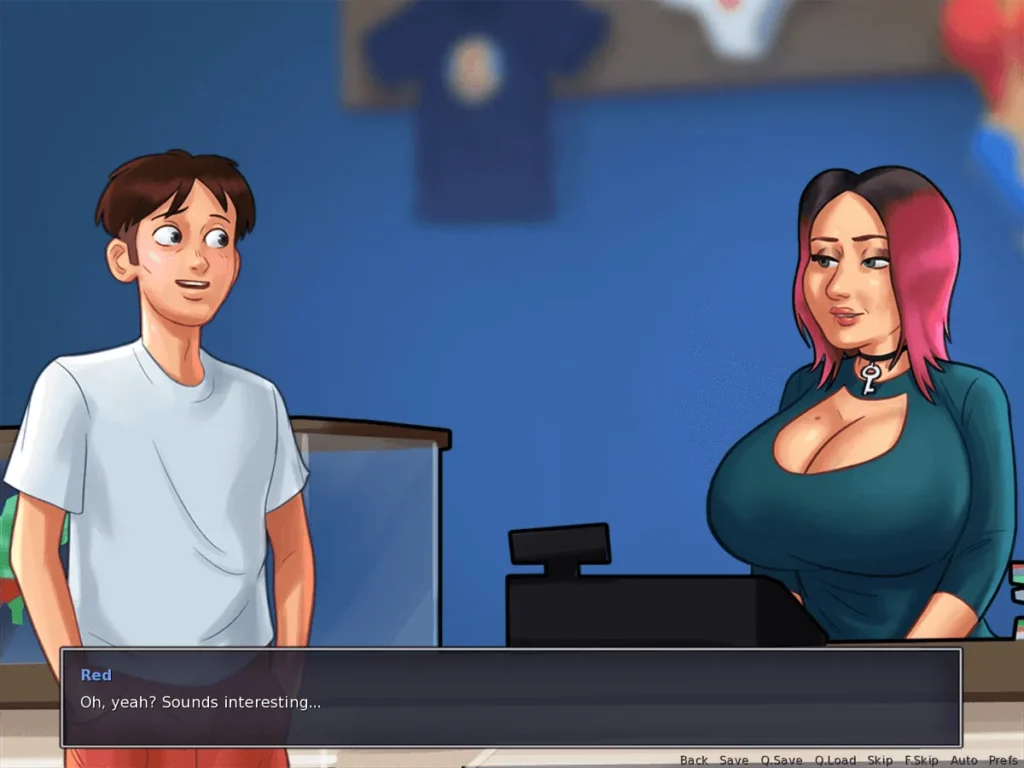
If you love stories where your choices matter, you’ll feel right at home here. The visual novel storytelling is the backbone of the experience. Most of the narrative is delivered through beautifully drawn character sprites, detailed backgrounds, and text boxes where you select dialogue options. These choices can be flirtatious, friendly, investigative, or even rude, and they have real consequences. A kind word might open a new Summertime Saga character route, while a misstep could shut it down for days (or forever).
This is where the “dating sim” heart truly beats. 🫀 Unlike many visual novels that follow a linear path, Summertime Saga gives you an entire town of potential connections. Each major character has their own storyline, complete with unique quests, emotional beats, and milestones. You might be helping the shy girl next door with her confidence, untangling the complicated life of a popular classmate, or getting involved in the dramas of older town residents. The game’s dating simulation game features are deeply integrated with progression; advancing a relationship often requires you to raise certain stats, obtain specific items, or complete tasks for that person.
The brilliance is in the interweaving. A quest for one character might lead you to a location or person crucial for another’s route. The visual novel storytelling never feels like a isolated novel; it feels like you’re living a life, where all your social interactions are threads in a larger tapestry.
Point-and-Click Mechanics and Open-World Exploration
Forget rigid level selection screens. Summertime Saga presents its world as a fully realized map you can explore at your own pace. This point and click adventure game layer is what sets it apart. You click on locations—your house, the school, the beach, the mall, the bakery—to travel there. Once at a location, you click on characters to talk to them or on objects to interact with them. Found a mysterious key? Click on drawers and doors to see if it fits. Need to find a specific item for a quest? Start clicking around likely spots!
This point and click adventure game design creates a wonderful sense of discovery and agency. I’ll never forget the time I was stuck on a quest for hours. The clue was vague. Out of frustration, I just started randomly clicking on bookshelves in a character’s house I’d visited a dozen times before. Lo and behold, on the third shelf, a hidden diary I’d never noticed appeared. That “Eureka!” moment is pure adventure-game magic. ✨
Exploration is tied directly to the Summertime Saga quest system. Your journal keeps track of active quests, but it rarely holds your hand. You need to talk to people, examine your environment, and think about where clues might lead. The open-world exploration means you can often work on multiple quests in parallel as you traverse the town, making efficient use of your daily time and energy.
Now, to keep this intricate life simulation running smoothly, the game relies on several core systems. Managing these is the key to success.
| System | Function & Importance |
|---|---|
| Stats (Body, Intelligence, Charisma) | These are your core attributes. Body is increased by working out and is needed for physical jobs or certain story moments. Intelligence is raised by studying and is required for test answers and complex tasks. Charisma, boosted by using the mirror at home, affects dialogue options and prices in shops. Neglecting them can lock you out of content. |
| Energy | Your daily fuel. Every action—working, studying, talking to people—costs energy. It replenishes by sleeping (advancing the day) or consuming food/drinks. Managing energy is the fundamental rhythm of the Summertime Saga gameplay mechanics. |
| Money | The universal resource. Earned from jobs, mini-games, or “creative” endeavors. Used for buying items, gifts, bribes, and story-critical payments. Financial pressure from the main debt drives much of your early-game activity. |
| Inventory | Your backpack for everything you find, buy, or are given. Quest items, gifts, tools, and consumables (like food for energy) are stored here. Some items are permanent keys, while others are consumable. Organization is implied, as the game automatically sorts items. |
Progressing Through the Story: Quests and Routes
So, with your stats managed and your map open, how do you actually move the story forward? Everything revolves around the Summertime Saga quest system. Quests are the milestones that structure your playthrough. They fall into two broad categories: the overarching Main Story Quests and the numerous Character-Specific Routes.
Let’s talk about the main plot first. Your primary drive is to solve the mystery of your father’s death and clear his debt. This unfolds through three major narrative arcs:
- The Debt Quest: 😰 The most urgent thread. You owe a huge sum to a crime boss named Tony. This quest pushes you to explore various money-making avenues, from part-time jobs to riskier ventures, and involves dealing with the city’s criminal underbelly.
- The Mystery Quest: 🔍 The core intrigue. What really happened to your dad? This investigation will have you playing detective, following clues, sneaking into places, and piecing together a conspiracy that goes deeper than you imagined.
- The College Quest: 🎓 A more “normal” life thread. Enrolling and succeeding at college involves its own set of tasks, tests, and social hurdles, introducing you to many key characters and providing a contrasting pace to the darker main plots.
These three main quests are expertly braided together. Progress in one often unlocks clues or opportunities in another. You might be investigating your dad’s old workplace (Mystery) to find a lead that also helps you get a better-paying job (Debt).
Running parallel to this is the vast web of Summertime Saga character routes. These are the heart of the dating simulation game features. Almost every named character in Summerville has a multi-stage story arc that you unlock by building a relationship with them. This involves:
1. Finding and talking to them regularly.
2. Choosing favorable dialogue options.
3. Completing their personal quests (which often involve fetching items, delivering messages, or helping with their problems).
4. Meeting stat or item requirements at key moments.
Some routes are sweet and straightforward, while others are complex, dramatic, and deeply interwoven with the main quests. The game’s visual novel storytelling shines here, offering everything from lighthearted rom-com moments to emotionally charged narratives.
Pro Tip: Don’t try to do everything in one day! The game’s time progression is a tool. Some events only trigger on specific days of the week or after certain other events. If you’re stuck, try sleeping to advance the day and see what new opportunities appear.
The Engine and the Experience: Ren’Py and Replayability
The smooth blend of all these mechanics is powered by the Ren’Py visual novel engine. This tool is a big reason why the visual novel storytelling and point and click adventure game elements work so well together. It allows for the seamless integration of clickable maps, inventory systems, and complex variable tracking (like your relationship score with every character) behind the simple interface of a storybook.
This technical foundation enables the game’s greatest strength: replayability. Because your daily energy is limited and choices create branching paths, you simply cannot see everything in one go. Maybe this time you’ll romance the librarian. Next time, you’ll focus on the athletes. Perhaps you’ll see what happens if you consistently make the “wrong” or selfish choices. The Summertime Saga character routes are designed to be discovered over multiple playthroughs, each feeling fresh as you prioritize different relationships and strategies for solving the main quests.
Mastering how to play Summertime Saga is really about embracing its hybrid nature. It’s a life simulator, a detective story, a romance anthology, and a resource-management puzzle all in one. Start by following the main quest prompts to get your bearings, but don’t be afraid to wander. Click on everything. Talk to everyone. Save often before big choices. And most importantly, craft the unique story you want to experience in the wonderfully detailed, sometimes chaotic, always engaging town of Summerville. Your saga awaits
Summertime Saga represents a distinctive entry in the dating simulation genre, combining engaging storytelling with complex character interactions and strategic gameplay mechanics. From its humble beginnings as a learning project in 2016 to its current status as a well-funded indie game with thousands of dedicated supporters, the game has evolved into a rich narrative experience. The combination of hand-drawn visuals, multiple character routes, and an open-world setting creates an immersive experience that appeals to players seeking depth beyond typical adult games. Whether you’re drawn to the mystery surrounding the protagonist’s father, the diverse cast of 65+ characters, or the strategic gameplay elements, Summertime Saga offers substantial content with regular updates and expansions. The free-to-play model with optional Patreon support makes it accessible to everyone, while the active community and comprehensive wiki ensure new players have the resources needed to enjoy the game fully. As development continues toward completion of all student stories and main quests, the game promises even more content and polish in the coming updates.